
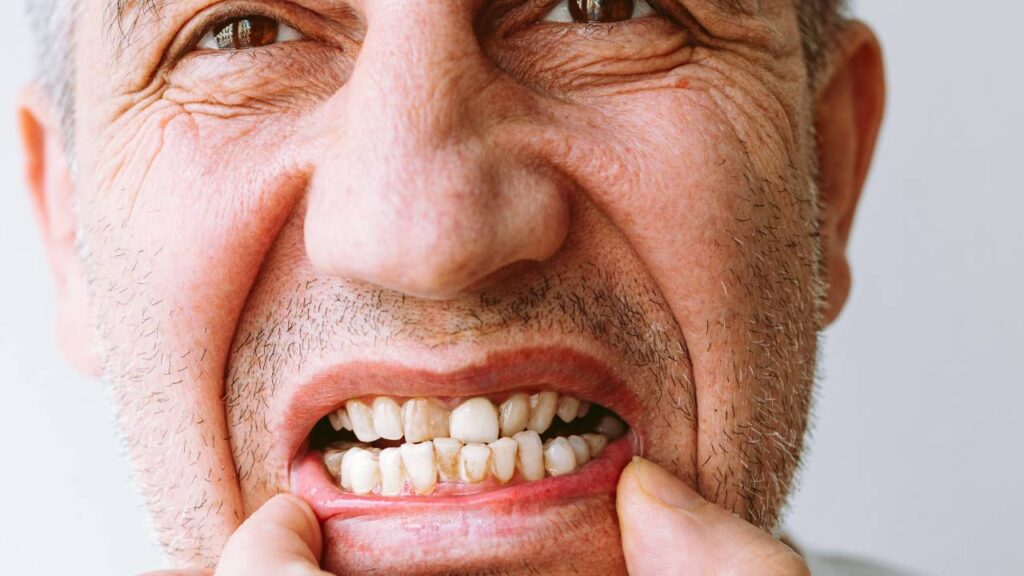
Tartar on the teeth can present as a rough, crusty patch on the outer layer of the tooth that can make anyone consider a quick fix for removal. Still, removing this substance on your own is just not a safe “Do-It-Yourself” project. Once plaque-bacteria has hardened into tartar, it adheres itself tightly to the tooth making it impossible to remove with brushing alone. If you’ve arrived at this stage of plaque/tartar buildup, you will require a professional tartar removal treatment to lift and remove it without harming yourself.
In this article, we’ll discuss how tartar develops, ways to avoid it and what you can do to remedy your situation with the help of a qualified dentist.
How Tartar Develops
It starts with Plaque, a soft film-like substance that is filled with live bacteria. This substance forms on the teeth every day, especially right along the gumline and between your teeth. When plaque is not removed daily, by brushing and flossing twice a day, it will eventually harden and develop into tartar, often referred to as calculus.
Since Plaque does not need weeks to develop, some dental sources note that the hardening process into tartar can begin in as little as 72 hours. Early build up may go unnoticed if it occurs in areas like behind the lower front teeth, which is usually where it starts.
Why Scraping Tartar At Home Is A Bad Idea
The biggest issue with scraping off tartar is access to hard to reach areas without causing injury. Tartar often lives under the gumline, which makes you susceptible to tissue cuts and even worse inflammation when using a home tool.
The next issue is the tooth surface, also known as the enamel layer. Scraping this layer can leave tiny abrasions or irritate exposed root areas resulting in excruciating pain. This attempt to scrape off tartar will result in those tiny abrasions, or scratches to make it easier for plaque to adhere to the teeth, creating a cycle that will speed up tartar development.
Lastly, there is the false finish line since removing even a small piece of tartar may feel like success but ultimately the remaining tartar will not only stay but also trap bacteria leading to gum inflammation. The CDC notes that tartar buildup cannot be removed with simple brushing, as a result a professional treatment is required.
While some methods can be used to eliminate plaque before hardening this isn’t the same for removing hardened tartar.
In Office Tartar Treatment Options
A routine professional cleaning will help to remove tartar above the gumline, while also smoothing the outer surface of the tooth. Our dental staff may also use Ultrasonic tools to help loosen deposits while rinsing away debris.
When tartar exists below the gumline and gum pockets have already formed, a deeper cleaning, known as scaling and root planing may be recommended during your appointment. Cleveland Clinic describes this process as a deep cleaning where scaling removes plaque and tartar both above and below the gumline, while root planing works to smooth roots and removes tartar below the gumline.
How To Keep Tartar From Coming Back
The best way to keep tartar at bay is to brush twice daily using a soft bristle brush. The goal when brushing is to aim for the gumline along with the chewing surfaces. Be sure to also clean between teeth using a flossing strip since plaque in these hidden areas can often harden not because you aren’t brushing but because you are totally missing the area.