
When a tooth is badly damaged or infected, two sound paths usually present themselves: save it with a root canal, or remove it and replace it with a dental implant. Both are proven treatments, yet each solves the problem in a very different way. Weighing them on cost, durability, and process makes the right choice far clearer.
Quick Comparison
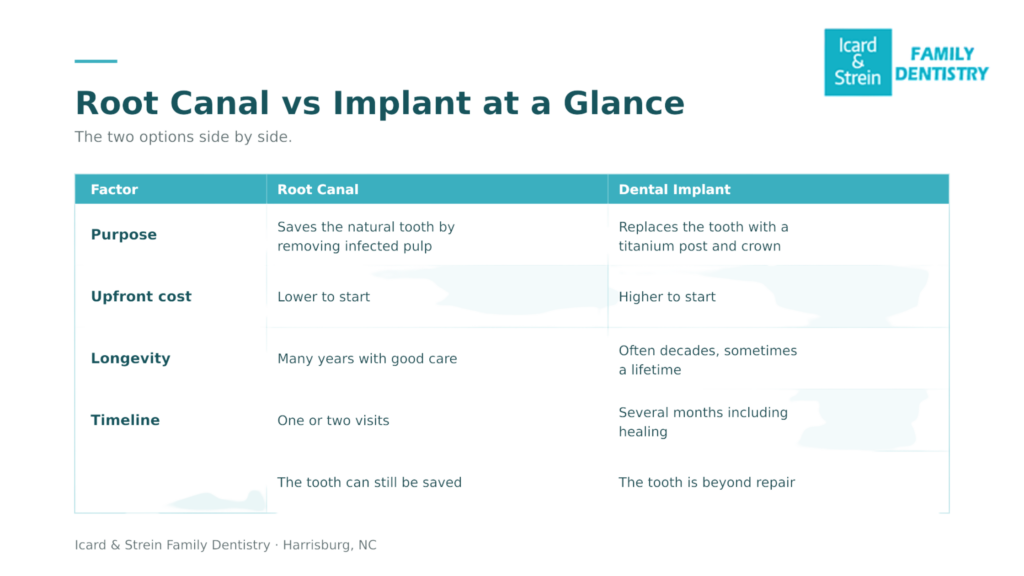
The table below sets the two options side by side at a glance.
| Factor | Root Canal | Dental Implant |
| Purpose | Saves the natural tooth by removing infected pulp | Replaces the tooth with a titanium post and crown |
| Upfront cost | Lower to start | Higher to start |
| Longevity | Many years with good care | Often decades, sometimes a lifetime |
| Timeline | One or two visits | Several months including healing |
| Best when | The tooth can still be saved | The tooth is beyond repair |
About Root Canals
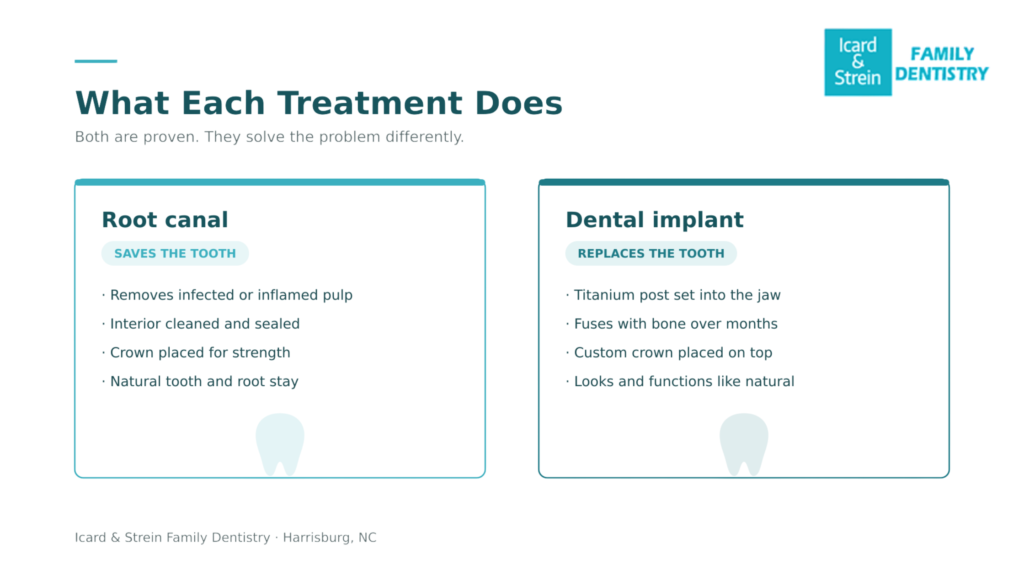
A root canal treats a tooth whose inner pulp has become infected or inflamed. The damaged pulp is removed, the interior is cleaned and sealed, and a crown is usually placed for strength. The great advantage, as the American Association of Endodontists underscores, is that the natural tooth stays in place along with its root and function.
About Implants
An implant replaces a tooth that cannot be saved. A titanium post is set into the jaw to act as an artificial root, fuses with the bone over several months, and receives a custom crown. The result looks and functions like a natural tooth, and it helps preserve the jaw, a benefit the American Dental Association notes as well.
Comparing Costs
A root canal generally costs less to begin with, since it involves fewer procedures and less time. An implant carries a higher initial cost because it includes surgery, the post, and the crown. Dental insurance frequently covers a share of a root canal, and coverage for implants varies widely, so checking a plan in advance helps avoid surprises. Value, though, deserves a longer view than the first invoice, because the least expensive option today is not always the wisest over many years.
How Long
Both treatments boast strong success rates. A well maintained root canal can last many years, while implants are prized for durability that often stretches across decades. The Mayo Clinic reports high long term success for implants placed and cared for properly.
Making the Choice
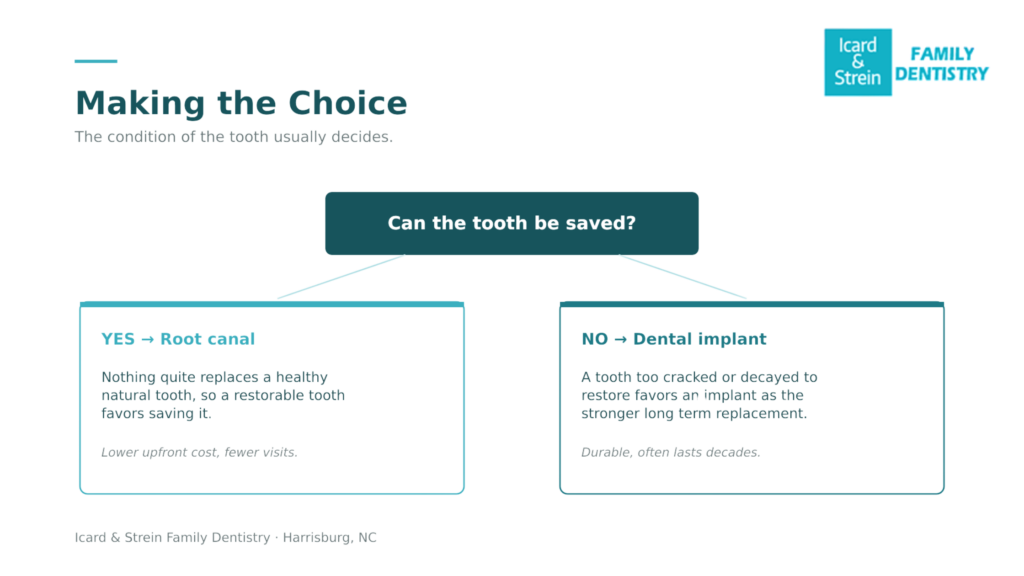
As a rule, a tooth that can be saved favors a root canal, since nothing quite replaces a healthy natural tooth. A tooth too cracked or decayed to restore favors an implant as the stronger long term replacement. The final decision rests on the condition of the tooth and the goals of the patient, which is precisely what an examination reveals.
Book a Visit
For anyone unsure which route fits their situation, Icard and Strein Family Dentistry in Harrisburg NC will evaluate the tooth, explain the choices plainly, and recommend the approach that protects the smile for the long run. Scheduling a consultation is a welcome first step.